
How we solve 22,000 support tickets every month with ElevenAgents
- Published
- Last updated
ListenListen to this article
We run our own customer support on ElevenAgents, resolving over 22,000 tickets monthly without needing to involve a single person. Our AI support agent works with text, screenshots, and PDFs, and is integrated with our ticketing platform. It handles long running conversations, looks up account information, takes actions, and escalates cases to support staff when needed.
Last month, our AI support agent resolved 65% of our tickets end to end. Our average initial response time is now 60 seconds, down from hours before adding our ElevenAgents teammate. Across all conversations the AI agent handled, 70% were rated positively by users.
ElevenLabs Customer Support Demo
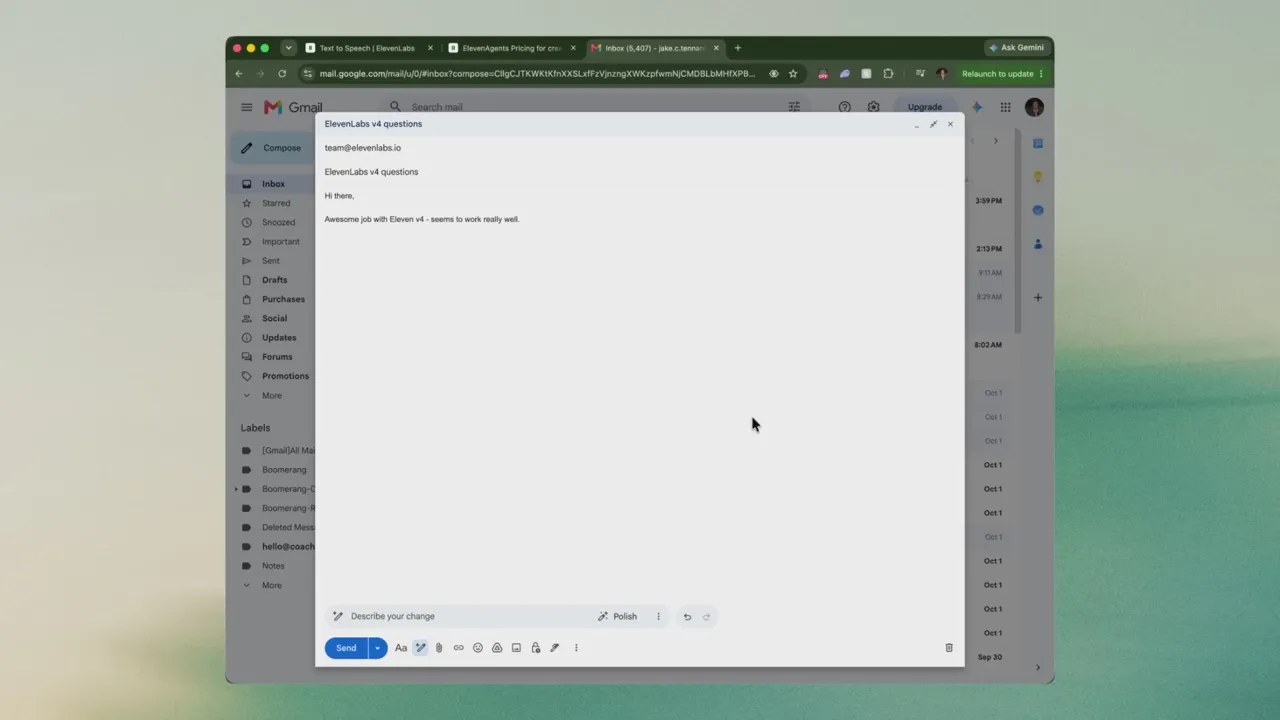
How we built our support agent
Our support team already had detailed standard operating procedures for every major ticket category - refunds, billing changes, professional voice clone questions, and more. The core of the build was translating that existing knowledge into something an agent could execute reliably. Two ElevenAgents features were critical here: procedures and webhook tools.
Procedures allows teams to turn existing customer support standard operating procedures (SOPs) into repeatable agent workflows. We ported over our support team’s playbooks into Procedures for each major ticket category. For critical actions like issuing refunds, we rely on Structured Procedures to ensure each step is taken deterministically.
Webhook tools are customizable tools that allow agents to dynamically look up user information such as subscription tier, credit usage, user owned voices, and more. By using webhook tools, our support agent could access user information easily, increasing its ability to resolve the user’s issue end to end.
Improving response quality
The following features enabled us to hit our customer support teams’ high quality bar:
- Channel behavior settings. Email and voice users expect different behavior. Email users want answers in as few turns as possible, while voice users expect natural, interactive conversations in real time with many more turns. We introduced channel behavior settings so each channel meets its own bar - such as email replies written to the standard of professional email communication.
- Simulation tests. We used simulation tests to understand how our agent performed in the roughly 50 scenarios that our customer support team encounters most frequently. From there, Architect iterated on the system prompt and procedures to pass all tests reliability. Finally, we re-ran this suite of tests after config changes to ensure we didn’t introduce any regressions.
- Shadow mode. We used our shadow mode feature to see how the agent would behave on production traffic within our ticketing system before deploying it. Once we were confident with its responses, we rolled it out to production.